Bayesian shape modelling

Shape models that know what they don't know.

Teaching and consulting on Bayesian shape modelling — hierarchical models, calibrated uncertainty, and JAX-speed inference for anatomy, implant design, and forensic reconstruction.

posterior samples
five posterior draws, one mean shape — same model, honest uncertainty
The gap

A classical fit gives you an answer. A posterior tells you how much to trust it.

Classical fitting

One shape, no confidence

Point-estimate registration returns a single best-fit surface. Where the data is sparse, damaged, or occluded, it looks exactly as confident as where the data is strong.

Bayesian fitting

A distribution, region by region

Full posterior sampling shows exactly where the model is confident and where it's guessing — the difference that matters when a reconstruction informs a diagnosis, an implant, or a courtroom.

What I offer

Two ways to work together

Consulting

Uncertainty-aware shape pipelines

Custom Bayesian shape-modelling systems for teams working with anatomy, implants, or reconstruction — built on typed, JAX-accelerated inference.

  • Reconstruction from partial or damaged scans, with calibrated confidence
  • Hierarchical models for small clinical subgroups
  • Migrating an existing classical pipeline to a Bayesian one
  • Model validation and review for shape-modelling systems already in use
Discuss a project
Teaching

Bayesian shape modelling, hands-on

A practical course for practitioners who already know classical statistical shape models and want to add principled uncertainty to their toolkit.

  • Five modules, from GP shape priors to model validation
  • Runs on real fitting code, not slideware
  • Cohort-based, with office hours
  • Built for researchers and engineers in medical imaging and forensics
See the curriculum
Curriculum

Five modules, in order

01

Shape as a distribution

Gaussian process shape priors, correspondence, and what it means to sample from a shape model rather than just build one.

02

Fitting under uncertainty

Posterior inference versus point estimates. MCMC and NUTS for shape-model fitting, and what you gain over ICP-style registration.

03

Partial pooling

Hierarchical models for population, subgroup, and individual-level shape variation — built for datasets too small to model any other way.

04

Robust and informative noise models

Heavy-tailed observation models for artifact-prone scans, and encoding real, non-uniform measurement uncertainty instead of assuming it away.

05

Validating a shape model

Posterior predictive checks and model comparison — the review step most shape-modelling work skips entirely.

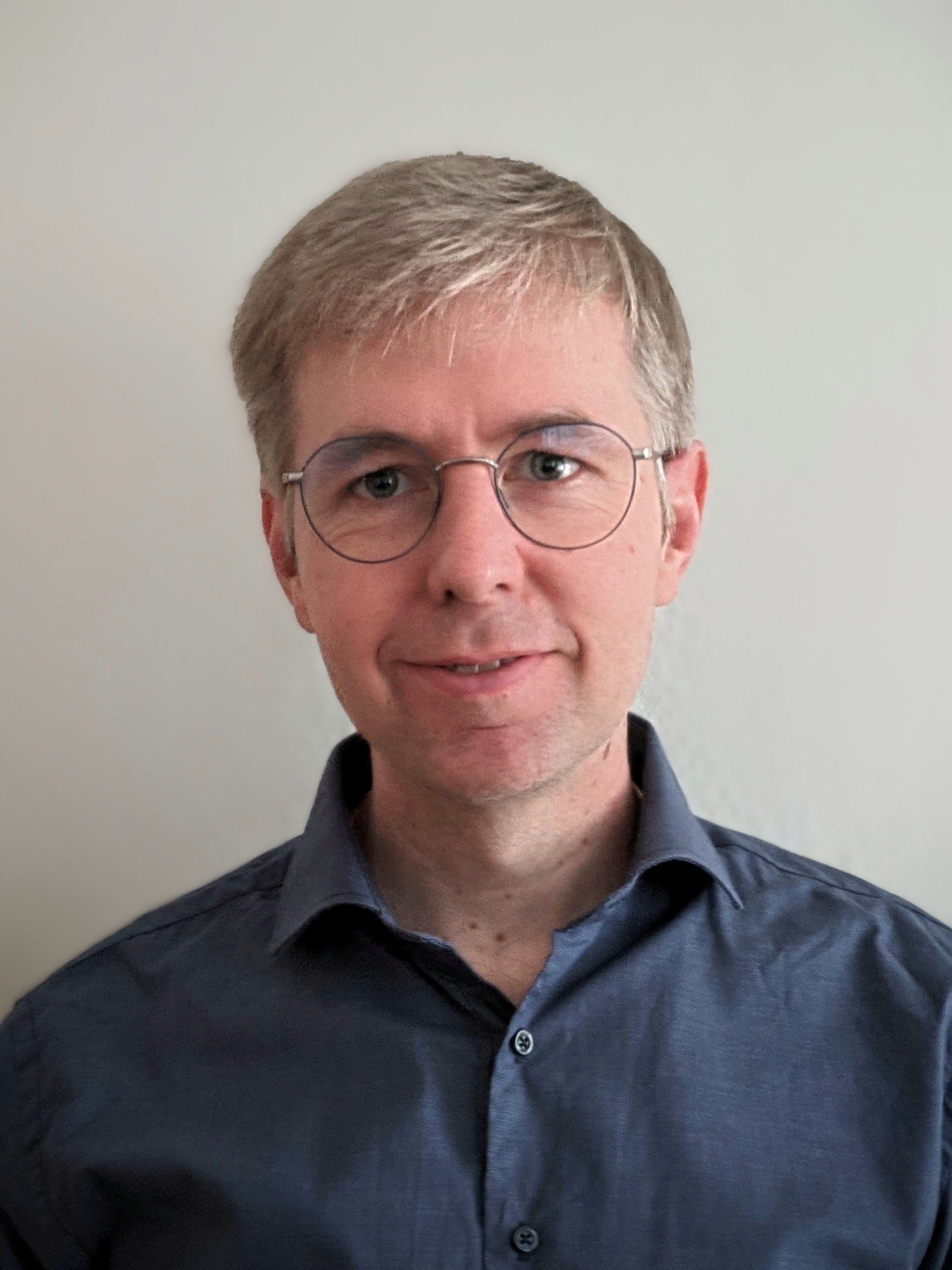
Profile photo
About

Marcel Lüthi (PhD)

I created Scalismo, the open-source statistical shape modelling library used across medical image analysis, and I'm the author of the original Gaussian Process Morphable Models formulation it's built on. Over more than a decade of applied work, this has meant collaborating directly with hospitals, implant designers, and forensic teams on real reconstruction problems — not just publishing methods.

BayesShape is where that work continues, focused specifically on bringing full Bayesian inference — calibrated uncertainty, hierarchical models, JAX-speed fitting — to a field that has mostly stopped at point estimates.

  • Creator of the Scalismo library for statistical shape modelling
  • Creator of the WitDraw library for Bayesian inference
  • Author, Gaussian Process Morphable Models
  • Applied work in medical implant design and forensic reconstruction
  • Extensive experience as lecturer for both university students and industry professionals
Get in touch

Start with a conversation, not a form.

Tell me whether you're interested in the course, a consulting project, or both — I'll follow up directly.

Thanks — I'll be in touch shortly.
No spam. Unsubscribe any time. [ connect this form to your email service ]